

Powering Knowledge Since Day One
EnergyScience Info was built on a simple premise: the energy transition is the most important challenge of our era, and understanding it shouldn't require a science degree. We translate complex research, policy shifts, and emerging technologies into clear, accurate, and engaging content for curious readers everywhere.
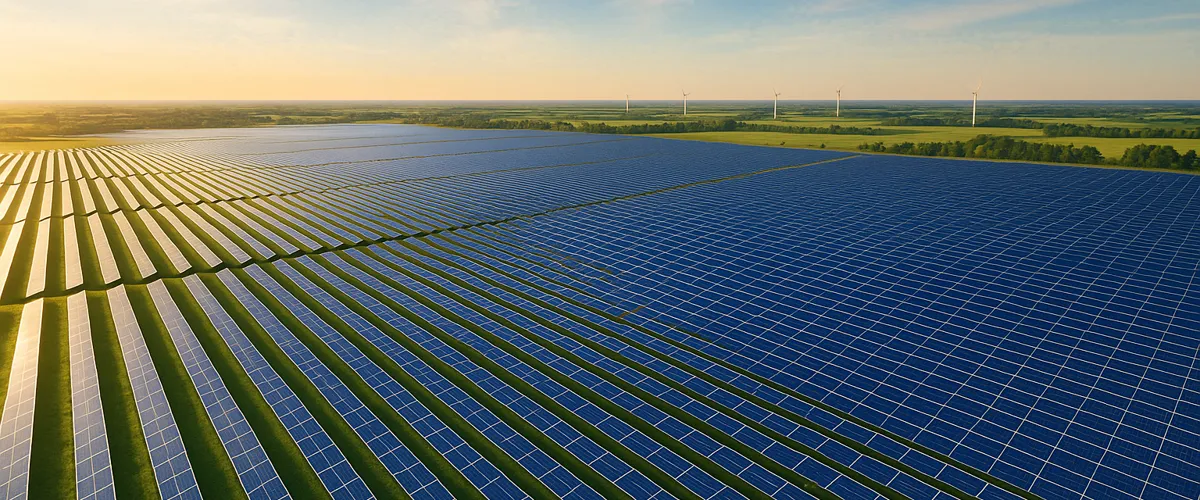
Our Mission
The global energy landscape is changing at an unprecedented pace. From breakthroughs in battery storage and offshore wind to the politics of carbon pricing and the science of tipping points — there is more to understand than ever before.
EnergyScience Info exists to make that understanding accessible. We publish in-depth guides, research breakdowns, science explainers, and policy analyses written with both accuracy and clarity. Whether you're a student, a professional, a policy enthusiast, or simply someone who wants to understand the world better, this is your resource.
We do not have financial relationships with energy companies, and we do not publish sponsored content. Our editorial independence is the foundation of everything we do.
What We Cover
Our content spans the full spectrum of energy science and sustainability:
Solar photovoltaics, onshore and offshore wind, run-of-river hydro, geothermal systems — how they work, how they're deployed, and how they fit into tomorrow's grid.
Carbon cycles, radiative forcing, feedback loops, ice-core records, and global temperature projections — the rigorous science behind climate change, explained clearly.
Lithium-ion and next-generation batteries, green hydrogen, smart grid infrastructure, carbon capture, and the digital transformation of energy systems.
Circular economy models, green building standards, sustainable supply chains, and the practical steps individuals, businesses, and cities can take toward a lower-carbon future.
Analysis of international agreements like the Paris Accord, national energy transition roadmaps, carbon pricing mechanisms, and the regulatory frameworks shaping investment decisions.
Accessible breakdowns of the physics, chemistry, and engineering behind energy systems — written for intellectually curious readers, not just specialists.
Our Editorial Values
Accuracy First
We ground every article in peer-reviewed research, official data, and expert sources. When scientific understanding is evolving, we say so. We correct errors promptly and transparently.
Clarity Without Compromise
Complexity is never an excuse for obscurity. We work hard to explain technical concepts in plain language without sacrificing nuance or precision.
Editorial Independence
EnergyScience Info does not accept sponsored content, paid placements, or undisclosed affiliate arrangements. Our recommendations and analyses are never influenced by commercial interests.
Systems Thinking
Energy is not a single issue — it connects economics, geopolitics, ecology, and human behaviour. We approach every topic with an awareness of these broader connections.
Editorial Approach

Our content is produced by a distributed team of writers, researchers, and editors with backgrounds in environmental science, engineering, energy policy, and science communication. We draw on academic journals, government datasets, think-tank reports, and international agency publications as our primary sources.
Every major factual claim is verified against at least two independent sources. We maintain a clear separation between reported fact, expert consensus, and opinion or analysis, and we label each appropriately.
We continuously update our guides and long-form articles as the science and technology landscape evolves. Publication and last-updated dates are displayed on every article so you always know how current the information is.
A Note on Scope
EnergyScience Info is an educational and informational publication. The content on this site is intended to help readers understand energy science and sustainability topics and does not constitute professional engineering, financial, or legal advice.
While we strive for accuracy, the energy sector is fast-moving. We encourage readers to consult primary sources and qualified professionals for decisions that require expert guidance.
Questions, corrections, or collaboration enquiries? Get in touch with us.